
Building collaboration, trust and transparency in Namibia's payment ecosystem.
CID developed a Strategic Stakeholder Engagement Programme for NamClear, the financial market infrastructure responsible for the local clearing of interbank transactions in Namibia's national payment system.

Note: in keeping with the confidentiality of this engagement, only a high level summary is presented here.
Why structured engagement matters for a financial market infrastructure
As a designated financial market infrastructure, NamClear operates at the centre of Namibia's payment industry, where the confidence of participants, regulators and the public is essential.
The programme was designed to strengthen collaboration and trust, support regulatory compliance, and enable the continued development of the payment system in response to market and technological change.
A four phase methodology
A structured, evidence based process moved the engagement from analysis to an actionable annual plan with measurable outcomes.
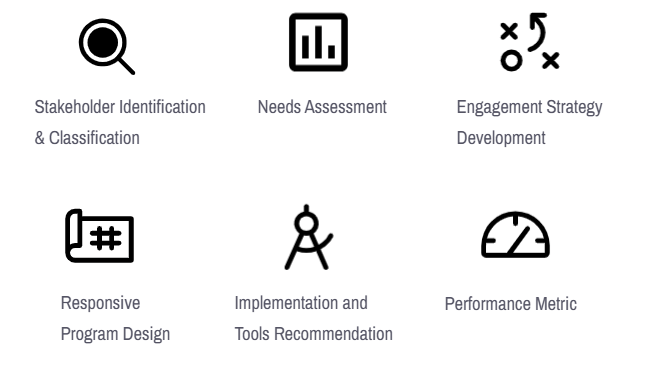
Stakeholder mapping and analysis
Identification and prioritisation of stakeholders according to their influence and interest, supported by research and an interactive stakeholder dashboard.
Engagement strategy
Tailored engagement objectives and approaches for each stakeholder category, aligned with NamClear's mandate and regulatory obligations, including a crisis communication framework.
Annual communication plan
A consistent, transparent communication calendar setting out activities, timelines and channels for the year.
Performance monitoring
Key performance indicators and a structured feedback mechanism to evaluate engagement effectiveness and guide continuous improvement.
What the programme provided
Stakeholder mapping and analysis report
With an interactive dashboard of stakeholder influence and engagement levels.
Stakeholder engagement strategy
Objectives, tailored approaches and trust building mechanisms.
Annual communication plan
Activities, timelines and engagement channels.
Final report and recommendations
Evaluation of effectiveness and proposals for future improvement.
The engagement drew on a multidisciplinary team combining strategic design and communication, stakeholder engagement and sustainability, economic policy, and finance.